Bright, tangy, and perfectly crunchy, this Vietnamese Carrot and Daikon Pickle (Đồ Chua) adds a burst of flavor to everything it touches. Made with just a few simple ingredients such as carrots, daikon radish, sugar, salt, vinegar, and water, it’s a quick and easy refrigerator pickle that is ready in minutes. Traditionally served with Vietnamese Banh Mi sandwiches, this pickled mix also tastes amazing in rice bowls, noodle salads, and grilled meat dishes. The balance of sweet, sour, and crisp makes it the perfect condiment to brighten rich or savory meals. Keep a jar in your fridge, and you will always have the perfect topping for sandwiches, tacos, or even burgers.
My Approach
Use equal size matchsticks – Cut your carrots and daikon evenly so they pickle at the same rate and stay crunchy.
Don’t skip the salting step – Tossing the veggies with salt and a little sugar first helps draw out excess moisture. This gives you crisp, restaurant quality pickles.
Julienne the vegetables — Carrots and daikon cut into thin, even matchsticks.
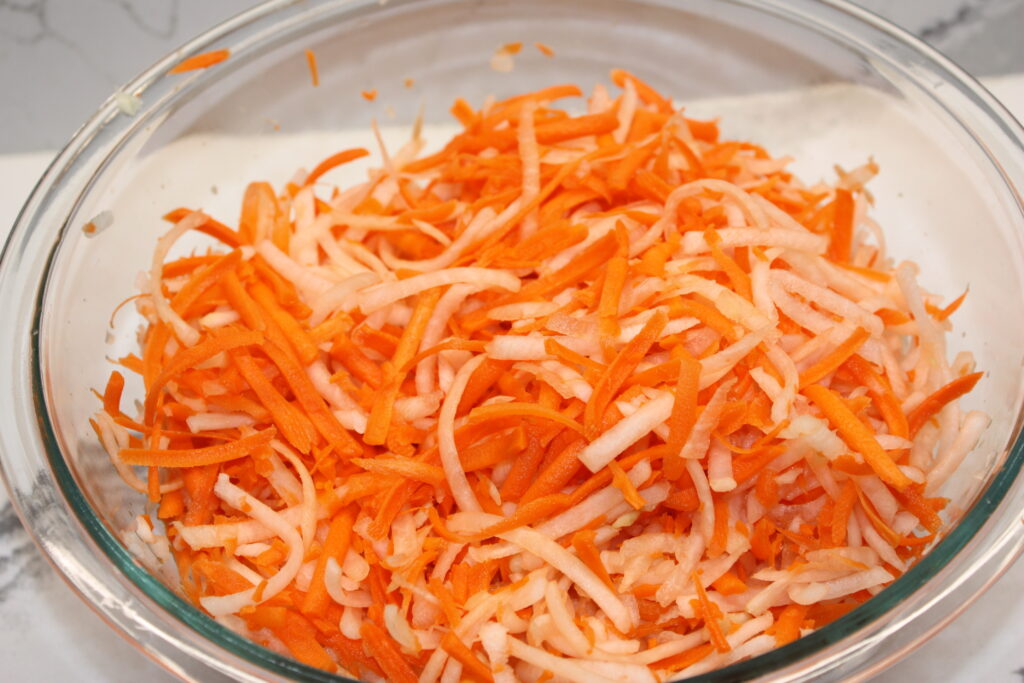
Salt and drain — A short salt step helps the pickles stay crisp and not watery.
Pack the jar — Tightly pack vegetables so the brine covers them well.
Pour brine — Pour until fully submerged.
Finished jar — Bright, crisp pickles ready for banh mi and bowls.
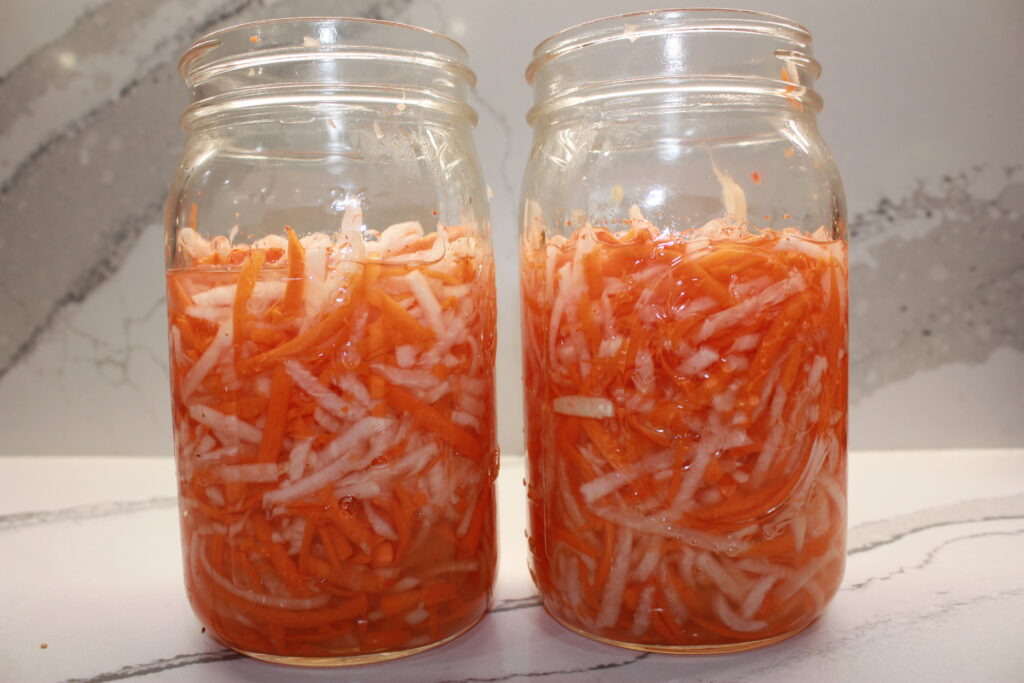

Vietnamese Pickled Carrots and Daikon (Đồ Chua) – Easy Banh Mi Topping Recipe
Ingredients
Vegetables
Pickling brine
How to Make It
-
Prepare vegetables
Peel and cut carrots and daikon into thin matchsticks (about 2-3 inches long).
-
Salt and drain briefly
In a large bowl, toss carrots and daikon with salt. Let sit for 20-30 minutes, then rinse well and gently squeeze to remove extra water.
-
Mix the pickling brine
In a bowl or small pot, combine rice vinegar, water, and sugar. Stir until sugar dissolves. Taste and adjust slightly sweeter or tangier based on your preference.
-
Pack and pour
Pack carrots and daikon into a clean jar. Pour brine over until submerged. Press down gently if needed so everything stays under the liquid.
-
Chill and serve
Cover and refrigerate at least 1 hour before serving. Best flavor develops after 24 hours.
Note
Tips for Success:
Cut the carrots and daikon evenly so they pickle at the same speed and stay crunchy.
Do not skip the quick salt-and-drain step if you want crisp pickles and a brine that stays bright.
Make sure the vegetables stay fully submerged in the brine for the cleanest flavor and best texture.
Let the jar chill for a few hours before serving, and expect the flavor to deepen overnight.